Galway Street by Street: Every Quarter, Landmark and What to See
The short answer. One line of street runs downhill from Eyre Square to the river, changing name four times on the way. Almost everything worth stopping for is on it or a few metres off it: Lynch's Castle, a 1320 church, a thirteenth-century hall under an office floor, the Spanish Arch and the Claddagh. You can walk the lot in an hour, or take three and see it properly.
Galway's old town is small enough that a walking tour can cover it and still stop. That is unusual, and it is why the Galway city tours here are short: seventy-five minutes, ninety, two and a half hours. This is the route they take, in order, with what each stop is and what it costs.
Eyre Square, where everything starts
Officially the John F. Kennedy Memorial Park, and one walking tour's first stop is the memorial in it. At the northern end stands the Browne Doorway: the carved front of a seventeenth-century merchant house, moved here from Lower Abbeygate Street. It is a Tribes doorway with no house behind it, and it tells you most of what you need to know about how this town remembers itself.
Every coach also loads within four hundred metres of this square, so you will pass through it whether you mean to or not.
Shop Street, and the finest house the Tribes left
From the square the street runs downhill and changes name four times: Williamsgate, William, Shop, High, Quay. Where Shop Street meets Abbeygate Street stands Lynch's Castle, the fortified townhouse of the Lynch family, with its carved stone front and gargoyles still on the outside. It is the most complete piece of medieval domestic architecture on the walk, and you look at it from the pavement.
Fourteen merchant families ran this town for centuries — Lynch, Blake, Browne, Joyce, Martin and the rest — and their names are now the street signs. The full history is on Galway city.
St Nicholas' Collegiate Church
Completed in 1320 and used for worship ever since, which makes it one of the longest continuously used buildings you will stand in this week. The church's own account says Christopher Columbus prayed here before sailing west; treat that as the church's tradition rather than as settled history, and enjoy it either way.
It opens Monday, Tuesday, Thursday, Friday and Saturday from 10:00 to 17:30, Wednesday from 11:00 and Sunday from 13:00, with last entry half an hour before closing.
Kirwan's Lane and the Latin Quarter
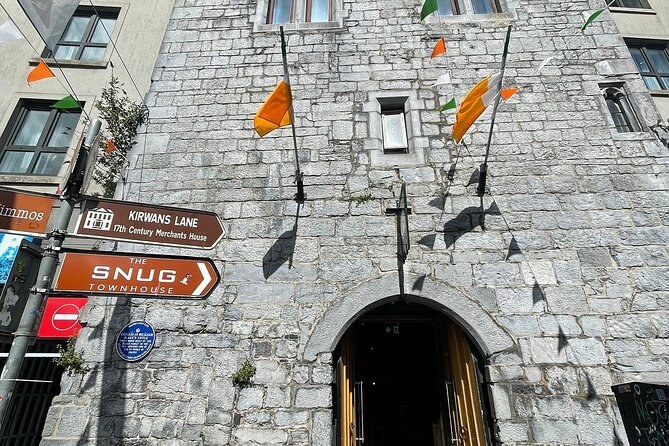
Off the main street, Kirwan's Lane is a seventeenth-century merchants' lane barely two metres wide. Around it the Latin Quarter is the painted, pedestrianised half of the old town: buskers, shopfronts in six colours, and most of the doors both tasting tours stop at.
Thomas Dillon's on Quay Street has sold Claddagh rings since the eighteenth century and keeps a small museum at the back of the shop. It is a stop on two of the walking routes and free to look at.
The Hall of the Red Earl
The oldest excavated building in the city, and the one most visitors walk over without knowing. Office of Public Works archaeologists found it in 1997 when an extension to the adjoining offices was proposed, and over 11,000 artefacts came out of the dig. Richard de Burgo built it in the thirteenth century as the town's first municipal building — tax office, courthouse and town hall in one.
It is on Druid Lane, off Quay Street, open Monday to Friday from 09:30 to 16:30, and free. Galway Civic Trust also runs free walking tours of medieval Galway from it at 14:00 on Tuesdays and Thursdays from June to September.
The Spanish Arch and the museum
Where the street reaches the Corrib, the Spanish Arch is what survives of the town wall at the river. Galway City Museum stands beside it on Spanish Parade: free, with a suggested €5 donation, open Tuesday to Saturday from 10:00 to 17:00 and Sunday afternoons from Easter to mid-September.
This is where most walking tours either finish or turn, and it is the natural place to stop for an hour if you are not on one.
The Claddagh and the Long Walk
Across the water the Claddagh was a fishing village outside the walls, with its own customs and its own king, and the ring that carries its name came from there. The Long Walk runs along the far quay in a row of painted houses, and the Galway hookers — black-hulled, gaff-rigged, built on this shore — moor in front of them.
It is the photograph everyone takes home, and it is five minutes from the arch.
Up to the cathedral and the university
Cross the Salmon Weir Bridge and you reach the Cathedral of Our Lady Assumed into Heaven and St Nicholas, dedicated on 15 August 1965 and, by its own description, the youngest of Europe's great stone cathedrals. It opens about 08:00 to 20:00 and asks for a €3 donation rather than an admission fee. Do not walk in during Mass unless you are staying for it.
Beyond it the university quadrangle closes the walk, and two of the city tours finish there.
How long each version takes
| Route | Length | What it adds |
|---|---|---|
| Seventy-five-minute introduction | 1h 15m | Eyre Square, the Browne Doorway, Lynch's Castle, the Claddagh Ring Museum, the arch |
| Celtic mythology walk | 1h 30m | The university, the cathedral, the Corrib, the Claddagh and the arch, with the myths |
| Walking and tasting | 2h 30m | Nine stops from Eyre Square into the Latin Quarter, with food at most of them |
| Private walking tour | 2h 30m | Ten stops including the Hall of the Red Earl, at whatever pace you set |
| Electric bike | 2 to 3h | Adds Salthill, the prom and the university, which walking does not reach |
Salthill, if you have another hour
Salthill is half an hour west along the bay on foot, or four stops on the open-top bus, and its promenade runs two kilometres above the shore to the Blackrock diving tower. Local custom is to kick the wall at the end before turning back. On a clear evening you can see the Aran Islands and the hills of Clare across the water, and it costs nothing at all.
Want somebody to walk it with you? Every guided route through the old town is compared on Galway Ireland Tours, with what each one stops at.
Walks that cover this route
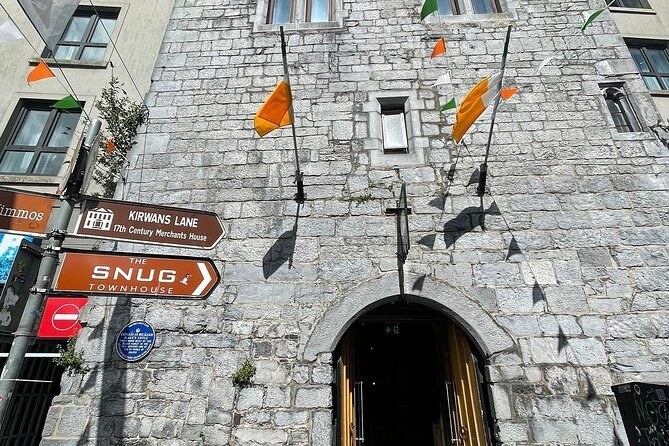
Galway Private Walking Tour
A licensed guide, your party alone and the pace you set, from Eyre Square to the university.
From $159 per person
Check Availability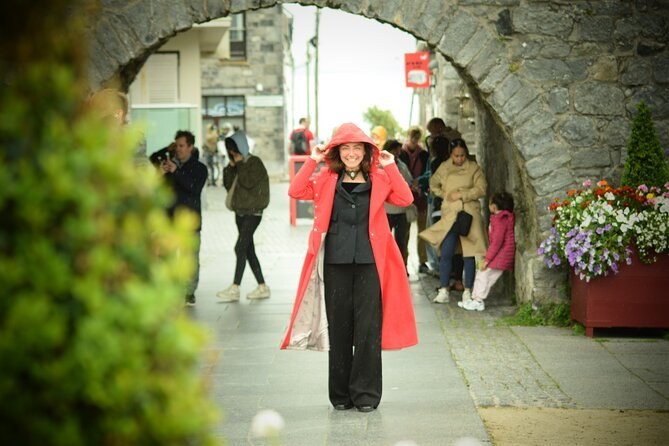
Galway Celtic Mythology Tour
Ninety minutes of Irish myth on foot, off the main tourist line and free for under-sevens.
From $35 per person
Check Availability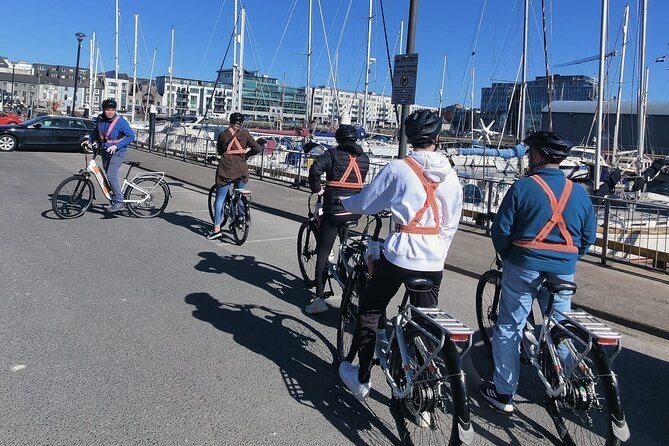
Electric Bike Tour of Galway City with Expert Local Guide
Five neighbourhoods in two to three hours without the hills, on an electric bike with a radio in the helmet.
From $100 per person
Check Availability