Galway in Winter: What Still Runs
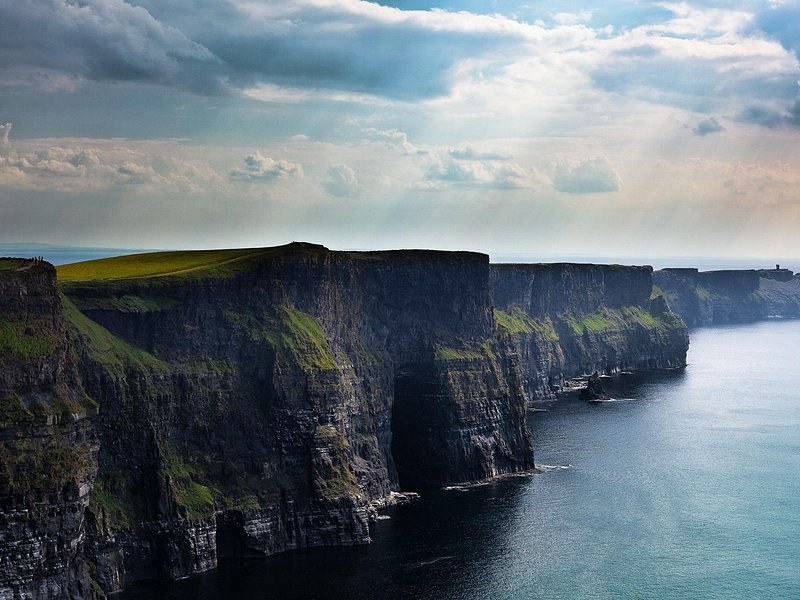
The short version. The Cliffs of Moher close at 17:00 instead of 21:00, the ferry to Inis Oírr becomes unreliable, and most of the year's gale days fall between November and February. Everything else keeps running: the coach days to Clare and Connemara go in any weather, and the city walks and Galway food tours run all winter. What you gain is an empty cliff top.
Winter here is not a closed season, it is a shorter one. The nearest long-term climate record on this coast, Shannon Airport, puts December at 115mm of rain across seventeen wet days and January at 1.7 hours of sunshine a day — and none of that stops a coach. What changes is daylight, gate hours and the sea.
What actually closes
Very little. The Cliffs of Moher Visitor Experience closes on 24, 25 and 26 December and is otherwise open every day. Galway City Museum stops its Sunday opening in mid-September. The Hall of the Red Earl keeps its Monday-to-Friday hours all year.
What stops is not a building but a sailing. The crossing to Inis Oírr and the cruise beneath the cliff wall both sail at the skipper's discretion, and winter is when that discretion gets used.
How much shorter is the day?
| Winter, Nov to Feb | Summer, May to Aug | |
|---|---|---|
| Cliffs of Moher gate | 09:00 – 17:00 | 08:00 – 21:00 |
| Sunshine per day | 1.5 to 2.4 hours | 4.4 to 5.9 hours |
| Rain per month | 87 to 115 mm | 63 to 88 mm |
| Gale days per month | 1.2 to 1.8 | 0.0 to 0.2 |
| Air frost days | 3.2 to 5.2 | 0 |
Four hours off the gate is the number that matters. It is why winter departures leave later and return earlier, and why an evening at the cliffs is a May-to-August proposition only.
Do the day trips still run?
Yes, and their own listings say so. One operator's notes state that the tour operates in all weather and asks you to dress appropriately. The Clare and Connemara routes are road days with nothing weather-dependent in them, and they keep their timetables.
What thins out is departures. Several listings carry a minimum-numbers clause: if a date does not fill, the operator can cancel and offers you an alternative or a full refund. In January that is a real possibility on the smaller coaches, so book a few days ahead rather than the night before.
What about the ferry?
Treat it as a maybe. Gale days cluster from November to February — 4.3 of the year's 7.5 fall in December, January and February alone — and a gale is exactly what stops the fifteen-minute crossing from Doolin.
If the island is the point of your trip, come in April or May. If it is one thing on a longer list, book it early in your stay with free cancellation and keep a Connemara day as the swap. Both directions are compared on the Aran Islands page.
Is the cliff top worth it in January?
More than in July, if you can take the wind. The Visitor Experience names 11:00 to 16:00 as its peak, and in winter those hours are most of the opening day — but the crowds are a fraction of the summer ones, and the light at either end of a short day is the best you will get on that coast.
Dress for it properly. Mean wind on this coast sits near nine knots all year and the cliff top is exposed on the calmest day; in a January southwesterly it is a different place.
What is genuinely better in winter?
- The city. The Latin Quarter is busy without being full, and you can get a table.
- The cliffs at opening. A 09:00 arrival in December puts you on the path with almost nobody.
- Prices and beds. Outside the two festival fortnights in July, winter is the cheapest time to be here.
- The tasting walks. Two and a half hours mostly indoors, and a far better use of a wet afternoon than a viewpoint.
What to wear, specifically
A waterproof shell rather than an umbrella — the wind takes umbrellas at the cliffs, and the rain here arrives sideways. Layers underneath, because the coach is warm and the cliff top is not. Shoes with grip for the Burren limestone, which is slick when wet.
Air frost is rare on this coast even in January, at about five days in the month, so this is a wet and windy winter rather than a cold one.
A winter week that works
- Arrival afternoon. The seventy-five-minute city walk, then eat early.
- Day two. The Cliffs of Moher and the Burren, leaving Merchants Road at 9:40. Back before dark.
- Day three. Connemara, which runs whatever the sky does.
- Day four. A tasting walk in the afternoon, and the museum or the cathedral in the morning.
- Spare day. Keep it for the island, and only book the crossing if the forecast turns settled.
What is the city itself like in January?
Busy with its own people rather than with visitors, which is the version most travellers never see. You can get a table in the Latin Quarter without booking, the sessions in the pubs are for the room rather than for a crowd, and the walking tours run with a handful of people on them.
Salthill is the surprise. The promenade is at its best in a winter southwesterly, with the waves coming over the wall and the light going down over the bay by half past four. It costs nothing, it takes an hour, and it is the thing people remember from a January visit.
What the Christmas fortnight looks like
The Cliffs of Moher close for three days — 24, 25 and 26 December — and the city is busy with its own people rather than with visitors. The day trips run either side of those dates. If you are here for it, the cathedral is worth an hour and the market lane beside St Nicholas' church is at its best.
Is there anything you simply cannot do?
Two things, and both are about light rather than closure. An evening at the Cliffs of Moher is a May-to-August proposition, because the gate shuts at 17:00 from November: the late golden hour on the cliff top is not available to you in January. And the long walk along the coastal path is a summer undertaking for most people, because four hours of exposed trail in a December southwesterly is a different activity from the same walk in May.
Everything else is available. The abbey, the museum, the cathedral, the Burren, the Latin Quarter and both tasting routes keep going.
How far ahead should you book in winter?
Further than you would expect, and for the opposite reason to summer. In July you book early because the coaches fill. In January you book a few days ahead because several listings carry a minimum-numbers clause, and a departure that has not filled can be cancelled with an alternative or a full refund offered.
Booking two or three days out rather than the night before gives the operator time to fill the seat beside you, which is the thing that decides whether your day runs. The city walks and the bus have no such constraint.
When winter ends, on the numbers
1 March, as far as the cliffs are concerned: the gate moves to 08:00–19:00 that day and puts four hours back on your options. April is the driest month of the year at 62mm, gale days drop below half a day a month, and by 1 May the gate is open until 21:00. Month by month, that is all on Galway weather.
Frequently asked questions
When is the best month to visit Galway?
What happens if the weather turns?
What time do the Cliffs of Moher open?
What happens if the ferry is cancelled?
What can I see in Galway for free?
Do I need to book in advance?
Every winter departure and what it covers is on: Galway Ireland Tours.
The days that run whatever the sky does

Galway Food Tours
Two and a half hours of tastings on foot from Shop Street, with the eating inside the price and the group capped at twelve.
From $106 per person
Check Availability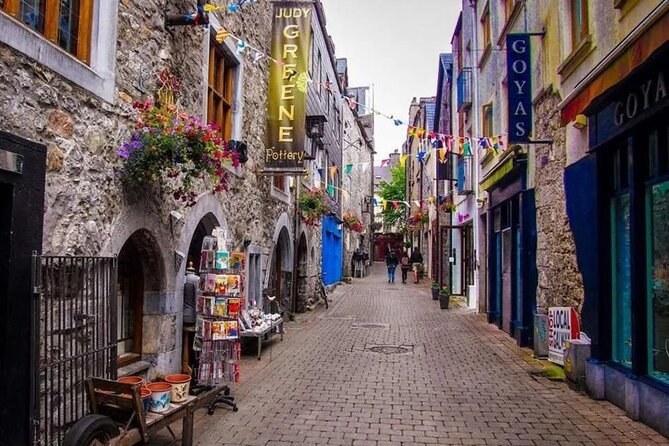
Walking and Tasting Tour of Galway City
Nine stops in two and a half hours with the history and the food together, afternoon or evening.
From $82 per person
Check Availability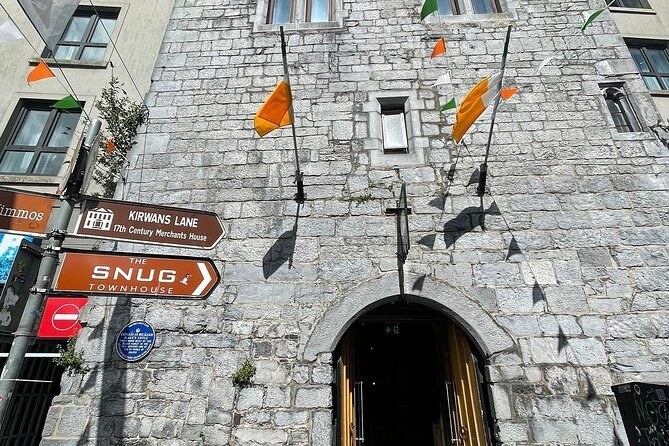
Galway Private Walking Tour
A licensed guide, your party alone and the pace you set, from Eyre Square to the university.
From $159 per person
Check Availability